Compression Socks and Circulation: What to Know for Wide Calves
Graduated compression socks are firmest at the ankle and gradually lighter toward the knee. Medical compression has been studied for years, and doctors use it for specific conditions. Everyday socks like Movira are different: they’re made for comfort, and we don’t claim that they treat or improve any medical condition. If you’re worried about your circulation, or you notice sudden swelling in one leg or unusual pain, talk to your doctor first.
TL;DR:
- Graduated compression means a snug fit at the ankle that eases off toward the knee.
- Research on compression mostly looks at medical-grade garments and specific groups of people, so it doesn’t automatically apply to everyday comfort socks.
- Movira socks are comfort socks at 15–20 mmHg, not a medical product. For circulation concerns, your doctor is the right person to ask.
- For wide calves, fit matters most: measure seated, in the morning, and choose a size made for your calf.
- Take compression socks off if they cause pain, numbness, or skin changes.
Table of Contents
- What is graduated compression?
- What does the research look at?
- When to talk to your doctor first
- How do you choose the right compression socks?
- How do you wear and care for compression socks?
- Our take on fit-first compression
- A wide-calf option built for daily comfort
- FAQ
What is graduated compression?
Graduated compression means the sock is snuggest at your ankle and gradually lighter as it moves up your calf. It isn’t an even squeeze like a rubber band. The pressure is measured in mmHg at the ankle, and 15–20 mmHg is a light, everyday level that many people choose for long days, travel, or time on their feet.
Many people describe a well-fitting pair as a gentle, even hug around the leg. Whether that feels comfortable depends almost entirely on fit: the right size feels snug and smooth, while the wrong size feels tight, rolls down, or digs in.
What does the research look at?
Compression has been studied for a long time, mostly in medical settings. Researchers look at medical-grade garments, specific pressure levels, and specific groups of people, such as patients with vein conditions or volunteers in a lab. For example, a small study in young volunteers measured short-term changes in the blood vessels while they wore compression socks.
Clinical sources such as Harvard Health and Yale Medicine explain when doctors recommend compression and for whom. They also point out that it’s a tool doctors use for specific needs, not a cure.
It’s important to read this research for what it is. It doesn’t test any particular brand of everyday socks, including ours. Movira socks are comfort socks, and we don’t claim that they improve circulation, reduce swelling, or treat any condition. If you’re looking for compression for a medical reason, your doctor can tell you what you need.
When to talk to your doctor first
Talk to your doctor before wearing compression socks if you have:
- A known vein or artery condition, or poor circulation in your legs
- Diabetes or another condition that reduces feeling in your feet or legs
- Open wounds, skin infections, or fragile skin on your legs
- Swelling in only one leg, or swelling that came on suddenly
- You’re pregnant or have a heart condition
And take them off and get medical advice right away if you notice severe or worsening pain, numbness, or skin that turns pale, blue, or unusually dark. For more, see our guide on when not to wear compression socks.
How do you choose the right compression socks?
Fit is where most people go wrong, and it’s also where most of the frustration with compression socks starts.
Start with a measurement, not a guess. Sit down in the morning, wrap a soft tape measure around the widest part of your calf, and compare the number in inches with the size chart, rather than going by your shoe or clothing size. Our calf measuring guide walks through it step by step.
Compression level is usually printed in mmHg. 15–20 mmHg is a common choice for everyday comfort, travel, and long days on your feet. Firmer levels such as 20–30 mmHg are usually used when a doctor recommends them.
Calf width matters just as much as the compression level. A standard sock stretched over a wider calf doesn’t just feel tight. It can roll down, dig in at the top, or bunch up. That’s why Movira socks come in sizes L through 4XL for calves up to 25 inches.
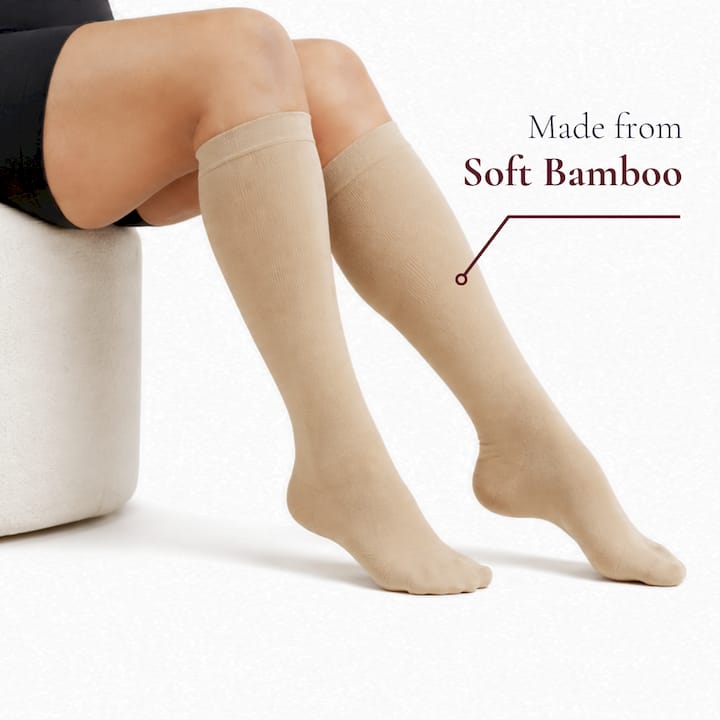
Fabric matters for all-day comfort too. A soft, breathable fabric like bamboo feels lighter on the skin over a long day, which makes it easier to keep wearing your socks.
Pro Tip: If you land between two sizes or aren’t sure, send us your calf measurement and your height and we’ll help you choose.
How do you wear and care for compression socks?
- Put them on in the morning and take them off before bed, unless your doctor tells you otherwise.
- Turn the sock inside out down to the heel, slip your foot in, then ease it up your leg smoothly so it doesn’t bunch.
- Let the top band sit about two finger-widths below the bend of your knee. If there’s extra length, spread it evenly down your leg rather than folding the band over.
- Hand wash or use a gentle cycle, and air dry instead of tumble drying, since heat wears out the stretch.
If a sock keeps rolling down, that’s usually a fit issue, not you. It often means the size doesn’t match your calf.
Pro Tip: Keep a pair of rubber dish gloves near your sock drawer. The extra grip makes pulling socks up smooth and quick.
Our take on fit-first compression
Most compression sock advice focuses on mmHg numbers and skips the part that decides whether someone actually keeps wearing their socks: fit. We’ve heard the same story again and again from women with fuller calves. Standard “one-size” socks roll down by lunchtime or leave a tight line at the top of the calf.
That’s why Movira makes every pair in sizes L through 4XL for calves up to 25 inches, in a soft, super-stretch bamboo fabric. Our socks are made for everyday comfort, not as a medical product. And every order is covered by our 60-Day Fit Guarantee: if the size isn’t right, we send you the right one.
— Movira Team
A wide-calf option built for daily comfort
Movira™ Bamboo Wide Calf Compression Socks exist because too many women with fuller calves have been stuck choosing between “too tight” and “too loose.”
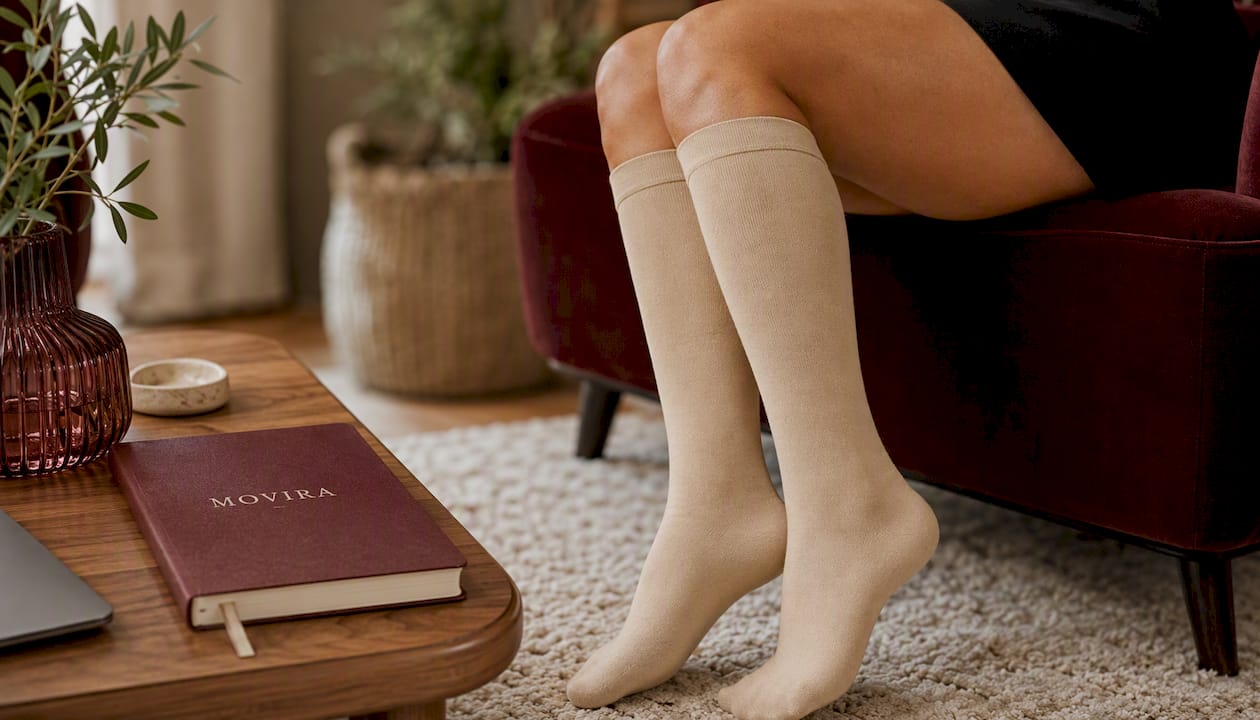
- Sized by your calf: L through 4XL, for calves up to 25 inches.
- Soft, breathable bamboo: comfortable on a flight, through a long day on your feet, or at home.
- 15–20 mmHg graduated compression: a light, everyday level.
- 60-Day Fit Guarantee: if the size isn’t right, we send you the right one.
Browse the full wide-calf compression sock collection to find your size.
FAQ
Do compression socks help circulation?
Graduated compression has been studied in medical settings, and clinical sources such as Harvard Health discuss its use for people who sit or stand for long periods. Movira socks are everyday comfort socks, not a medical product, and we don’t claim medical benefits. If you have concerns about your circulation, talk to your doctor.
Should I ask my doctor before wearing compression socks?
Yes, if you have a known vein or artery condition, diabetes with reduced feeling in your feet, open wounds or skin problems on your legs, or swelling in only one leg. Your doctor can tell you whether compression is right for you and which level to use.
What is the downside of wearing compression socks?
The most common problem is the wrong fit. A sock that is too tight, or one that rolls down into a tight band, can be uncomfortable and leave marks. That is why measuring your calf and choosing the right size matters so much.
How many hours a day should I wear compression socks?
Most people put them on in the morning, wear them during the day, and take them off before bed. Take them off any time they feel painful or cause numbness, and follow your doctor’s advice if you have a medical condition.
Recommended
- How Tight Should Compression Socks Be? A Fit Guide
- Compression Socks Side Effects: What’s Normal and When to Stop
- What Does 15–20 mmHg Mean?
- Movira Bamboo Wide-Calf Compression Socks | L–4XL
This article is for general information and fit/comfort guidance only. It is not medical advice. Movira socks are everyday comfort products, not a medical or prescription device.
Tags:
Previous
Wide Calf Women: Compression Socks or Sleeves for Up to 25 Inches
Next
Fit First: Support Socks vs Compression for Calves Up to 25 Inches
Related articles

Plus Size Compression Socks for Women That Fit
Oct 09 2026