15–20 mmHg Compression That Fits Wide Calves Up to 25 Inches
15-20 mmHg compression is the mild-to-moderate graduated pressure range built for everyday comfort: travel, long shifts on your feet, and mild end-of-day swelling. It’s the standard starting point most people reach for before anything stronger, and it works by squeezing tightest at the ankle and easing up the leg. If standard socks dig in or slide down your calf, a wide-calf design solves the fit problem while maintaining proper compression.
TL;DR:
- The 15-20 mmHg compression range offers mild-to-moderate support optimized for daily comfort, travel, and mild swelling, with graduated pressure strongest at the ankle.
- This level effectively reduces leg swelling during long periods of sitting or standing, but stronger levels like 20-30 mmHg provide additional relief, especially for prolonged seated hours.
- Proper fit, especially for wider calves, depends on accurate measurements and choosing socks with true wide-calf sizing and elastic, breathable fabrics like bamboo.
- Starting with 15-20 mmHg is generally advisable for most users, with higher compression levels reserved for persistent symptoms under medical guidance.
- Well-designed wide-calf compression socks, such as Movira’s bamboo options, are built to stay in place and maintain pressure without rolling or digging in, ensuring consistent support throughout the day.
Table of Contents
- What Does 15-20 mmHg Compression Actually Mean?
- Who Actually Needs 15-20 mmHg Compression?
- 15-20 mmHg vs 20-30 mmHg: What the Research Actually Shows
- Which Style and Material Work Best for Wider Calves?
- How Do You Measure for the Right Wide-Calf Fit?
- How Should You Put On and Care for Compression Socks?
- Movira Bamboo Wide-Calf Socks: What Makes Them Fit Differently
- Our Take: Fit Beats Firmness Every Time
- Where to Find Bamboo Compression Socks Built for Wider Calves
- Sources
- FAQ
What Does 15-20 mmHg Compression Actually Mean?
The “mmHg” stands for millimeters of mercury, the same pressure unit doctors use on a blood pressure cuff. A sock labeled 15-20 mmHg applies between 15 and 20 millimeters of mercury of pressure at your ankle, which is the highest-pressure point on the leg.
That’s the whole idea behind graduated compression: pressure is strongest at the ankle and gradually loosens as it moves up toward the knee or thigh. This tapering gradient is what separates a real compression sock from a simple snug sock. A sock that squeezes evenly from ankle to knee, or worse, tighter at the calf than the ankle, isn’t doing the job graduated compression is designed to do.
Here’s how the mild-to-moderate range typically feels in practice:
- A steady, hugging sensation around the ankle, easing gradually as you move up the leg
- No pinching, numbness, or tourniquet-like tightness behind the knee
- Noticeably less “heavy leg” feeling by the end of a long day on your feet
- A snug pull-on process, but not one that requires wrestling the fabric
Fast fact: Retail and clinical explainers consistently describe 15-20 mmHg as the common over-the-counter range for daily wear, positioned specifically for prevention and mild relief rather than clinical treatment. It’s not a medical device category. It’s the everyday-support tier.
Comfort matters here as much as the number on the label. A 15-20 mmHg sock made from stiff synthetic fabric can feel far more restrictive than the same pressure rating in a softer, more breathable knit, which is why material choice ends up being just as important as the mmHg number itself.
Who Actually Needs 15-20 mmHg Compression?
Most people who reach for 15-20 mmHg compression socks aren’t managing a diagnosed condition. They’re dealing with ordinary leg fatigue from daily routines that keep them upright or seated for hours at a stretch.
Typical everyday scenarios include:
- Long flights or road trips where legs stay still for hours
- Retail, nursing, teaching, or other jobs that involve standing shifts
- Pregnancy-related mild ankle or calf swelling
- General end-of-day heaviness after a lot of walking or standing
- Recovery days after travel or extended sitting at a desk
Pro Tip: If you’re new to compression, put your socks on first thing in the morning before any swelling builds up. It makes the fit noticeably easier and gives you the full benefit through the day.
There’s also a real reason so many people start at this level instead of jumping straight to something firmer: they actually wear it. Adherence matters more than theoretical performance, and a 2018 comparison study found that stronger compression, while more effective on paper, is also harder to pull on and more likely to get skipped on busy days.
That said, mild compression has limits, and it’s worth knowing when to loop in a doctor instead of relying on socks alone. Talk to a clinician if you notice swelling that hasn’t gone down by morning, a personal or family history of blood clots, or signs of poor circulation like cold, pale, or painful legs. Compression socks are a comfort and wellness tool, not a substitute for a medical evaluation when something feels off.
15-20 mmHg vs 20-30 mmHg: What the Research Actually Shows
Both levels reduce leg swelling. The real question is how much difference the extra pressure makes, and whether that difference is worth the trade-off in ease of wear.
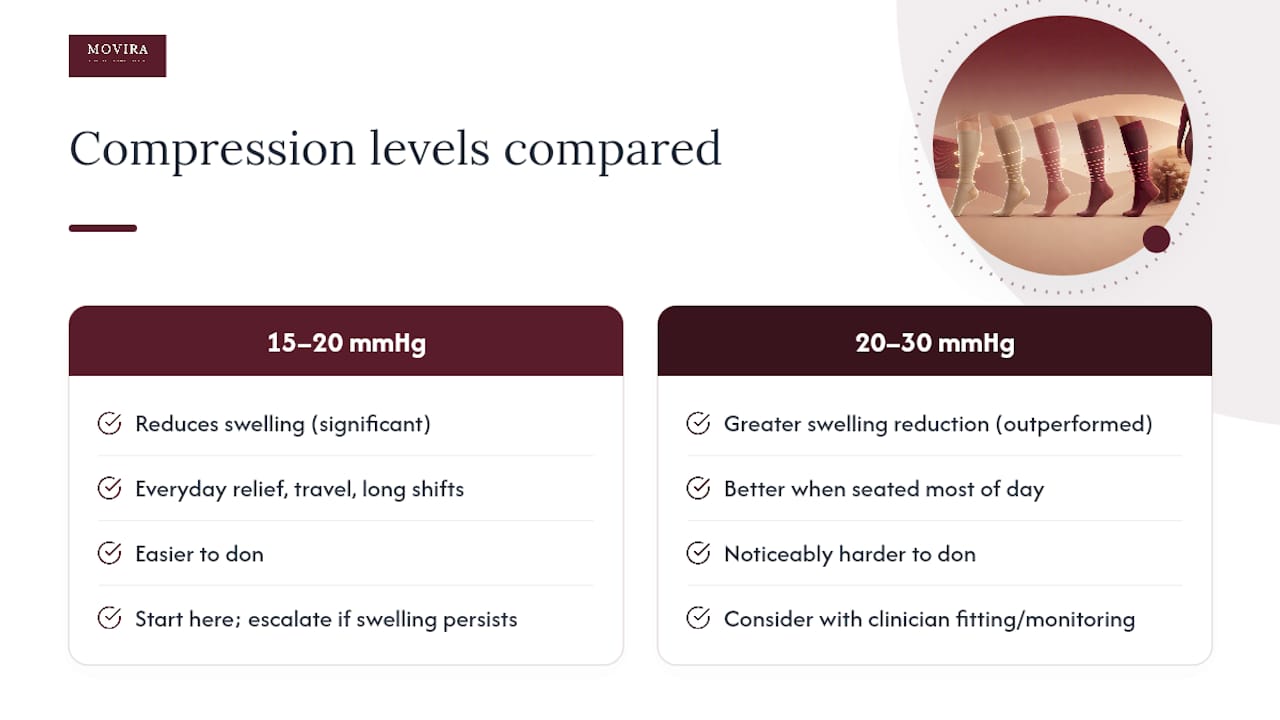
A 2018 peer-reviewed trial measured leg volume in 58 healthy adults, 116 legs total, over three days using water displacement testing, comparing no stockings, 15-20 mmHg, and 20-30 mmHg during standing and seated work. Both compression levels produced statistically significant reductions in occupational edema compared to wearing nothing. But 20-30 mmHg outperformed 15-20 mmHg, and the gap widened specifically for people who spent most of the day seated rather than standing.
The study’s core finding: stronger compression reduces more swelling, especially during prolonged sitting, but both levels beat no compression at all. The difference between them is a matter of degree, not a difference between something that works and something that doesn’t.
That extra effectiveness comes with a real cost, though. Pressure difficulty doesn’t rise in a straight line as mmHg increases. Once you cross into the 20-30 mmHg range, donning gets noticeably harder, and that added friction is a documented driver of people abandoning compression altogether.
So the practical rule of thumb looks like this: start with 15-20 mmHg for everyday relief, travel days, and long shifts. If swelling or heaviness persists despite consistent wear, that’s the signal to talk with a clinician about whether 20-30 mmHg, fitted and monitored properly, makes sense for your situation. Jumping straight to the stronger level without a reason to do so usually just means a harder-to-wear sock you’re less likely to put on tomorrow.
Which Style and Material Work Best for Wider Calves?
Compression socks aren’t one-size-fits-all in shape any more than they are in pressure. The style you choose changes coverage, and the material changes whether you’ll actually want to wear them at 4 p.m. on a Tuesday.
Common styles break down like this, including popular knee-high options that provide ankle to just below the knee coverage:
- Knee-high — the most popular everyday option, covering ankle to just below the knee.
- Thigh-high — extends coverage further up the leg, often chosen for more complete daily support.
- Compression pantyhose — full-leg coverage built into hosiery, typically worn under professional clothing.
- Open-toe vs. closed-toe — open-toe suits sandals and warmer climates; closed-toe works better for daily shoes and cooler weather.
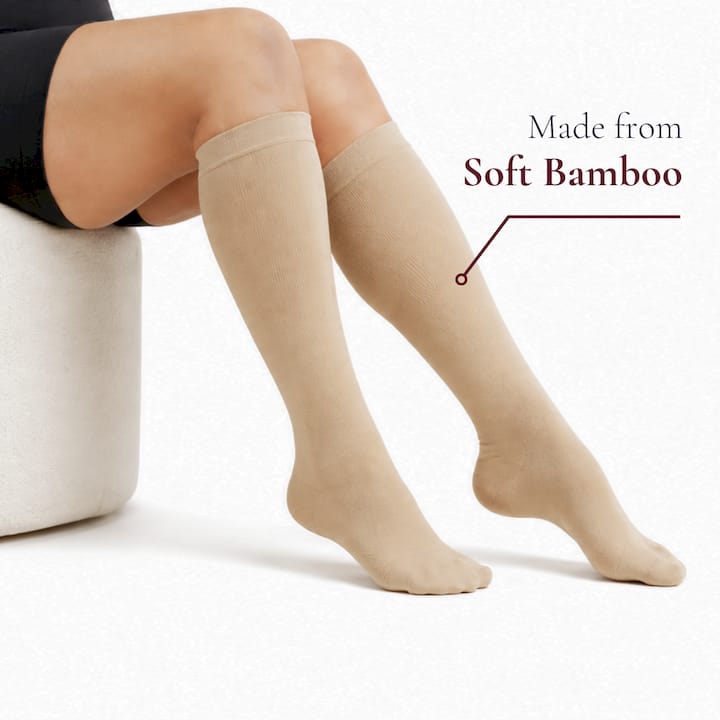
Material matters just as much as shape. Bamboo fabric is naturally soft and breathable, which helps a lot when you’re wearing compression for eight or ten hours straight. Synthetic blends can perform fine on the pressure side, but many run warmer and stiffer against the skin over a full day.
For wider calves specifically, look for:
- Extra-stretch knit panels built into the calf zone, not just the ankle
- A true graduated knit pattern that holds shape without rolling
- An actual wide-calf size range, not a generic “one size stretches to fit” label
That last point is worth repeating because it trips up so many shoppers: a standard sock stretched to fit a larger calf loses its ankle pressure in the process, which undercuts the entire point of graduated compression.
How Do You Measure for the Right Wide-Calf Fit?
Getting the size right is the difference between a sock that supports your leg all day and one that rolls down by lunch. Measure before you buy, not after the return window closes.
- Measure first thing in the morning, before any swelling has had a chance to build during the day.
- Wrap a soft tape measure around your ankle’s narrowest point, just above the ankle bone, for your first number.
- Wrap the tape around the widest part of your calf, usually a few inches below the knee, for your second number.
- Compare both measurements against the brand’s size chart, checking calf circumference specifically rather than shoe size or dress size, which don’t correlate reliably with calf width.
- If you fall between two sizes, size up in the calf range rather than the standard length, since a true wide-calf option preserves ankle pressure that a stretched-out standard sock won’t.
Pro Tip: Measure both legs. It’s common for one calf to run slightly larger than the other, and using the bigger measurement keeps the fit comfortable on both legs, not just one.
Sizing up an entire garment to accommodate a larger calf drops pressure below the intended mmHg at the ankle, according to compression stocking selection guidance, which is exactly why a dedicated wide-calf cut, sized correctly with sizes like L through 4XL, works better than forcing a standard sock to stretch. Movira’s wide-calf compression sock collection is built around this exact principle, with sizing designed for calves up to 25 inches.
How Should You Put On and Care for Compression Socks?
Getting the technique right makes a bigger difference in daily comfort than most people expect. Rushed, bunched-up donning is the most common reason a compression sock feels tighter than it should.
- Turn the sock partly inside out, down to the heel, before starting.
- Slip your foot in and settle the heel pocket into place first, making sure it lines up before pulling further.
- Gradually roll and smooth the fabric upward, avoiding one hard yank that bunches material at the ankle.
- Check for wrinkles or twisted fabric once it’s on, since bunched fabric creates uneven, uncomfortable pressure points.
- Replace socks every three to six months, or sooner if the fabric feels looser than when new or shows visible stretching, per general compression sock care guidance.
- Hand wash or use a gentle machine cycle in cold water, then air dry. Heat from a dryer breaks down the elastic fibers faster than normal wear does.
Movira Bamboo Wide-Calf Socks: What Makes Them Fit Differently
Movira builds its 15-20 mmHg socks specifically for the fit problem most wide-calf shoppers run into: standard socks that either roll down within an hour or feel like they’re cutting off circulation at the calf. Movira sizes run L through 4XL, with fabric engineered to comfortably fit calves up to 25 inches without sizing up the whole garment.
The bamboo fabric itself is soft, breathable, and built for full-day wear, whether that’s a plane ride, a retail shift, or just a long day on your feet. Every pair comes backed by a 60-day fit guarantee, so if the fit isn’t right, you’re not stuck with socks that don’t work for your legs. That’s a real hedge against the biggest risk in buying compression online: guessing wrong on calf size.
Our Take: Fit Beats Firmness Every Time
The evidence is clear that stronger compression reduces more swelling, particularly for people who sit most of the day. But the conventional advice to “just size up for wider calves” is where most people get let down, because a stretched standard sock loses ankle pressure and stops functioning as graduated compression at all.
What the research actually supports is starting mild and prioritizing fit over chasing a higher mmHg number you won’t wear consistently. A 15-20 mmHg sock worn every day beats a 20-30 mmHg sock that ends up in a drawer because it’s a fight to put on. That’s not a compromise. It’s just how adherence works.
If there’s one thing worth prioritizing first, it’s finding a sock engineered for your actual calf size rather than one you’re forcing to fit. Comfort isn’t a bonus feature here. It’s the entire reason someone keeps wearing the sock past week one.
— Movira Team
Where to Find Bamboo Compression Socks Built for Wider Calves
If you’ve been buying standard compression socks and stretching them past their limit, that’s the fit problem Movira set out to fix. The Movira Bamboo Wide Calf Compression Socks are built at 15-20 mmHg, with true wide-calf sizing from L to 4XL and room for calves up to 25 inches, so the pressure stays where it belongs instead of loosening up because the fabric had to stretch too far.
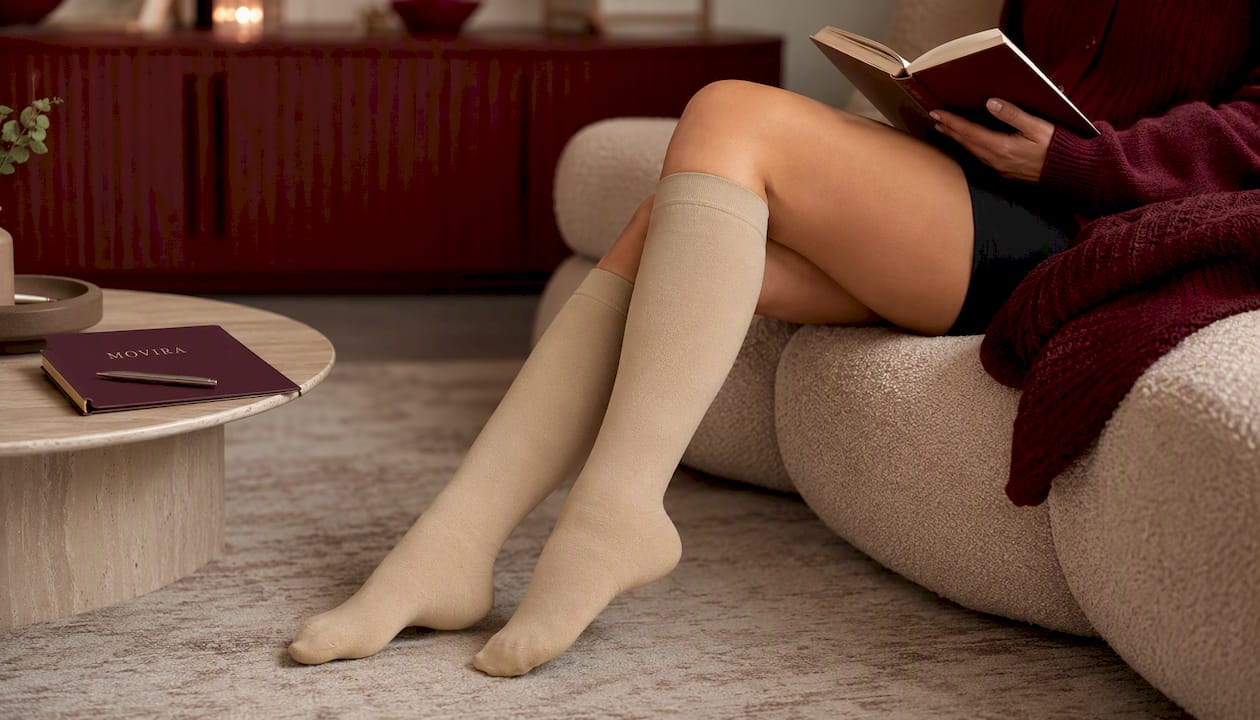
The bamboo knit stays soft and breathable through long travel days or standing shifts, and the graduated fit is designed to stay put without digging in behind the knee or sliding down by afternoon. Every order comes with a 60-day fit guarantee, so you can try them on your actual legs and know you’re covered if the size needs adjusting. Browse the full wide-calf compression sock collection and find your size before your next long day on your feet.
Sources
- Comparison of 15–20 mmHg versus 20–30 mmHg compression stockings in reducing occupational oedema in standing and seated healthy individuals
- How to choose compression stockings (WebMD)
- 15-20 mmHg Compression Level: What It Does for Legs
FAQ
What Does 15-20 mmHg Compression Mean?
It means the sock applies 15 to 20 millimeters of mercury of pressure at the ankle, tapering to a lighter pressure further up the leg, which is the standard mild-to-moderate range for everyday wear and travel.
How Tight Does 15-20 mmHg Compression Feel?
It should feel like a snug, hugging pull around the ankle that eases as it moves up your leg, firm enough to notice but never pinching, numbing, or cutting off circulation behind the knee.
Is 15-20 mmHg or 20-30 mmHg Better for Compression Socks?
A 2018 clinical comparison found 20-30 mmHg reduces occupational swelling more than 15-20 mmHg, especially for people who sit most of the day, but both levels significantly outperform wearing no compression at all. Most people should start at 15-20 mmHg and move up only if a clinician recommends it.
What Are the Best Socks for 15-20 mmHg Compression?
The best option depends on your calf size and how many hours you’ll wear them, but for wider calves, a true wide-calf design like Movira’s bamboo compression socks preserves ankle pressure better than a standard sock stretched to fit, and comes with a 60-day fit guarantee to back that up.
Recommended
- What Does 15–20 mmHg Mean? 15–20 vs 20–30 mmHg Explained for Wide Calves
- Wide-Calf Bamboo Compression Socks (L–4XL)
- Movira Bamboo Wide-Calf Compression Socks | L–4XL
This article is for general information and fit/comfort guidance only. It is not medical advice. Movira socks are everyday comfort products, not a medical or prescription device.
Tags:
Previous
20–30 mmHg Often OK: FSA Eligible Compression Socks in the U.S.
Next
Wide Calf Women: Compression Socks or Sleeves for Up to 25 Inches
Related articles
Plus Size Compression Socks for Women That Fit
Oct 09 2026