

Stop Digging In: How Long to Wear Compression Socks for Wide Calves
Wear compression socks during your waking hours. Put them on first thing in the morning before you stand up, and take them off at night unless a clinician has told you otherwise. For most people, that typically means wearing them during waking hours, from morning until bedtime, depending on your schedule, activity level, and how your legs feel by evening.
TL;DR:
- Wearing compression socks for about 10 to 15 hours a day, especially during standing or sitting periods, maximizes benefits without discomfort.
- For wider calves, choose supportive, breathable socks designed to fit up to 25 inches, avoiding tight elastic bands that cause pain or slippage.
- Overnight compression is generally unnecessary unless prescribed for medical conditions, as research shows limited benefit and potential discomfort for sleep.
- Gradually increase wear time over a week if new to compression socks, and put them on while still in bed for easier donning and better fit.
- Remove socks immediately if you experience numbness, pain, skin color changes, or open wounds, and keep skin clean and moisturized to prevent irritation.
Table of Contents
- How Long to Wear Compression Socks During the Day
- Are There Exceptions for Overnight Wear?
- Building Up to All-Day Wear Without the Discomfort
- When to Remove Your Socks: Warning Signs and Skin Care
- Getting the Fit and Compression Level Right
- What Fit-First Design Actually Looks Like
- Our Take on Comfort-First Compression Wear
- Ready to Try Compression Socks That Actually Fit?
- Sources
- FAQ
How Long to Wear Compression Socks During the Day
Morning application isn’t just a habit some people swear by. It’s the reason compression socks work as intended. When you’ve been lying down all night, fluid hasn’t had a chance to pool in your lower legs. The moment you stand up and stay upright, gravity starts pulling blood and fluid downward, and that’s exactly when graduated compression does its job best. Harvard Health notes that putting socks on before you get out of bed, then wearing them through the day and removing them at night, is the standard recommendation for most wearers.
What does a “full day” actually look like in practice? A few common patterns:
- Office workers: on around 7 a.m., off around 9 or 10 p.m. That’s roughly 14 to 15 hours.
- Standing jobs (retail, nursing, teaching): similar timing, but the benefit is more noticeable because standing all day is exactly when fluid pools fastest.
- Travelers: socks go on before a flight or long car ride and typically come off once you’ve reached your destination and can rest with your legs up.
- Lighter activity days: even 8 to 10 hours of wear during errands, walking, or a shorter workday still counts.
Sitting for long stretches (desk work, flights) and standing for long stretches both benefit from full daytime wear, just for slightly different reasons. Sitting slows circulation because your calf muscles aren’t pumping; standing lets gravity do more of the pulling. Moderate exercise, walking, and light activity actually help the socks work better because muscle movement supports venous return alongside the compression itself.
Naps are a gray area. A 20 to 30-minute rest with your legs elevated is fine to take with socks on. If you’re settling in for a full night’s sleep, that’s when they come off.
Pro Tip: Keep a second pair of socks by your bed. Putting on a fresh pair the moment you wake up, while you’re still lying down, is far easier than wrestling with compression fabric after you’ve been standing for ten minutes and your legs have already started to swell slightly.
Are There Exceptions for Overnight Wear?
Overnight compression isn’t the norm, but it isn’t unheard of either. Some clinical situations call for it, and the distinction matters:
- Venous ulcers or specific post-surgical protocols: some clinicians prescribe extended or overnight wear as part of a treatment plan for these specific conditions.
- Prescription schedules: MedlinePlus patient instructions are clear that some people are told to wear compression stockings all day or even during sleep, depending on their condition. If that’s you, follow the schedule your provider gave you, not general guidance from an article.
- Healthy, preventive use: for everyday wear, going overnight generally isn’t necessary. Research on sleep compression stockings found only small, short-lived reductions in morning leg circumference, along with increased discomfort for some wearers. The trade-off usually isn’t worth it unless a clinician has a specific reason for recommending it.
The short version: daytime wear is the default. Overnight wear is the exception, and it belongs to a conversation with your provider, not a general routine.
Building Up to All-Day Wear Without the Discomfort
If compression socks feel tight or unfamiliar at first, that’s normal, and there’s no rule that says you have to jump straight to a full 12 hour day. A gradual ramp-up works better for most new wearers:
- Day 1 to 2: wear for 2 to 4 hours, maybe during a morning errand run or a few hours at your desk.
- Day 3 to 4: add another 2 hours, working up to 6 to 8 hours total.
- Day 5 to 7: extend to a full day if you’re comfortable, typically 10 to 14 hours.
If a full day still feels like a lot after a week, there’s nothing wrong with stepping down to a slightly lower compression level short term while you get used to the sensation, then working back up.
Donning technique matters just as much as the schedule. Put socks on while you’re still in bed, before your feet touch the floor. Rubber gloves or a fabric donning aid make it easier to pull bamboo fabric up smoothly without bunching. Smooth out every wrinkle around the ankle and calf. A bunched sock doesn’t just feel uncomfortable, it can create pressure points that defeat the purpose of graduated compression.
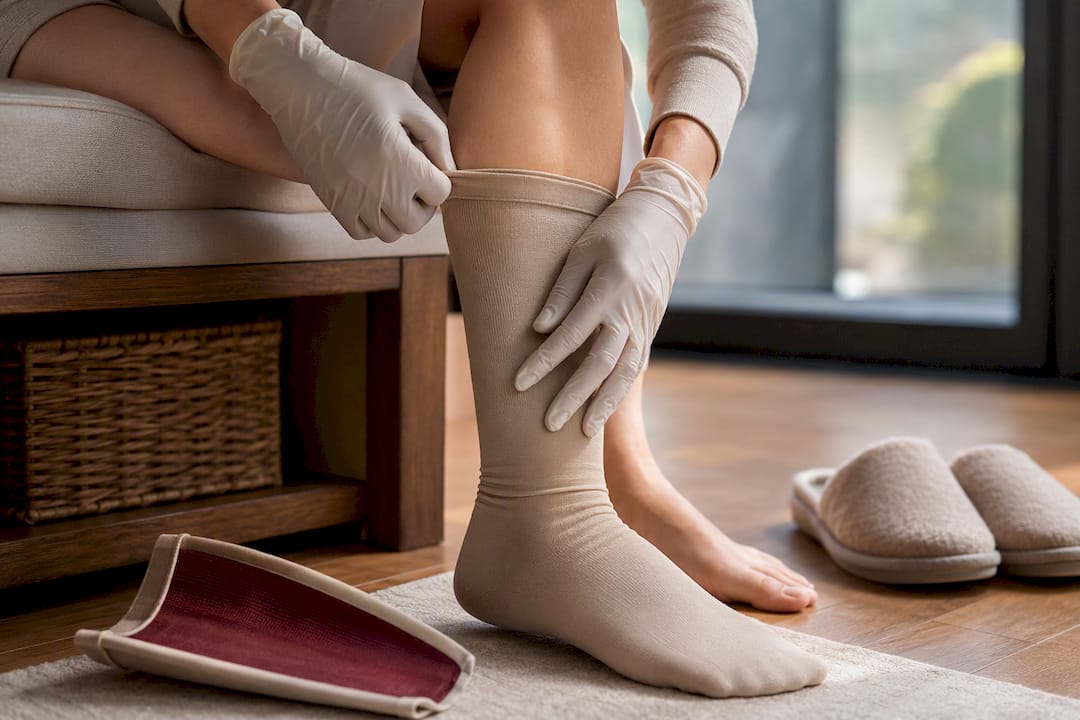
Pro Tip: If you’re new to compression wear, try your socks around the house for a weekend before committing to a full workday in them. You’ll learn how your legs respond without the added pressure of being out and about.
When to Remove Your Socks: Warning Signs and Skin Care
Comfort is the signal that tells you when something’s off. Cleveland Clinic’s guidance treats persistent discomfort as a legitimate reason to remove socks and reassess, whether that means the size, the compression level, or how they were put on.
Watch for these signs and take socks off if you notice them:
- Numbness or tingling in your toes or foot
- Increased pain rather than relief
- Skin that turns blue, pale, or unusually cool to the touch
- Blisters, redness that doesn’t fade, or any open skin
Public health guidance is consistent on this point: open wounds, severe pain, or visible skin color changes are reasons to contact a clinician, not just to swap socks. About one in three adults will develop some form of vein-related leg discomfort over their lifetime, which is exactly why paying attention to how your legs respond matters more than sticking rigidly to a wear-time target.
Give your skin a break between wears rather than pulling socks straight back on after a shower. A simple nightly routine, cleanse, dry thoroughly, moisturize, helps prevent the dryness and irritation that daily compression wear can sometimes cause over weeks and months.
Getting the Fit and Compression Level Right
Most everyday compression socks fall in the 15 to 20 mmHg range, which is the standard over-the-counter support level for daily comfort and wellness. Prescription-strength compression is higher and reserved for specific medical treatment plans set up with a provider. This article isn’t about that. It’s about the everyday support level most people reach for.
Fit is where most people go wrong, and it’s also where most of the discomfort complaints actually come from. A sock that’s too tight at the calf digs in and cuts off circulation to your foot; one that’s too loose rolls down within an hour and stops doing anything useful.
To get it right:
- Measure your calf at its widest point, standing, with a soft tape measure.
- Check the sizing chart, not just your shoe size or shirt size, since calf circumference varies enormously from person to person.
- Confirm the length reaches where it should, whether that’s knee-high or a shorter crew style, and that the toe box isn’t cramped.
- Prioritize a stable top band that holds position without a tight elastic bite. That’s the difference between socks you forget you’re wearing and socks you’re constantly adjusting.
This is exactly the gap Movira was built to close. Standard “wide calf” socks often top out well before they should, leaving anyone with a fuller calf choosing between digging elastic or socks that slide down by lunchtime. Movira’s bamboo wide-calf compression socks are built with extra stretch to fit calves up to 25 inches, in sizes L through 4XL, so the sock stays in place through a full day of wear, without rolling or squeezing.
What Fit-First Design Actually Looks Like
Movira’s focus has always been narrow on purpose: get the fit right for wider and fuller calves, because that’s the group standard sock sizing consistently underserves. Every size in the lineup, from L to 4XL, is built around real calf measurements up to 25 inches, not a generic “one size stretches to fit” assumption.
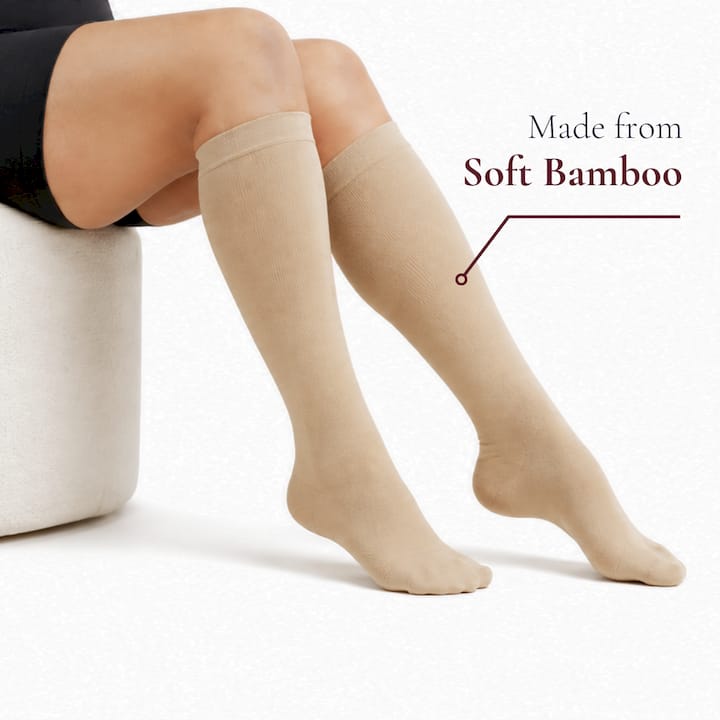
The fabric itself is soft, breathable bamboo, chosen because it holds its shape through long wear without feeling stiff or plasticky against skin. And because fit is such a personal thing, especially when you’re used to socks that don’t quite work for your leg shape, every pair comes with a 60-day fit guarantee. If they don’t sit right, you have time to find that out and make it right. You can see the sizing details on the bamboo compression sock product page, and read more about what other wearers with wider calves have found in real comparisons and fit stories.
Our Take on Comfort-First Compression Wear
We’d rather see someone wear a comfortable sock for 10 honest hours than fight through a full 16 hours in something that digs in by noon. The wear-time guidance in this article, wake up, put them on, take them off at night, only holds up if the sock actually fits your leg in the first place. That’s the piece a lot of general advice skips.
If you’re managing a diagnosed condition, none of this replaces what your provider has told you. Follow their schedule. For everyday comfort and support, fit is what makes the rest of the guidance actually usable.
— Movira Team
Ready to Try Compression Socks That Actually Fit?
Movira is the alternative to guessing your size off a generic chart. Our bamboo wide-calf compression socks are built with extra stretch specifically for calves up to 25 inches, in sizes L through 4XL, so you get soft, breathable support that stays in place for a full day without digging in or sliding down by afternoon.
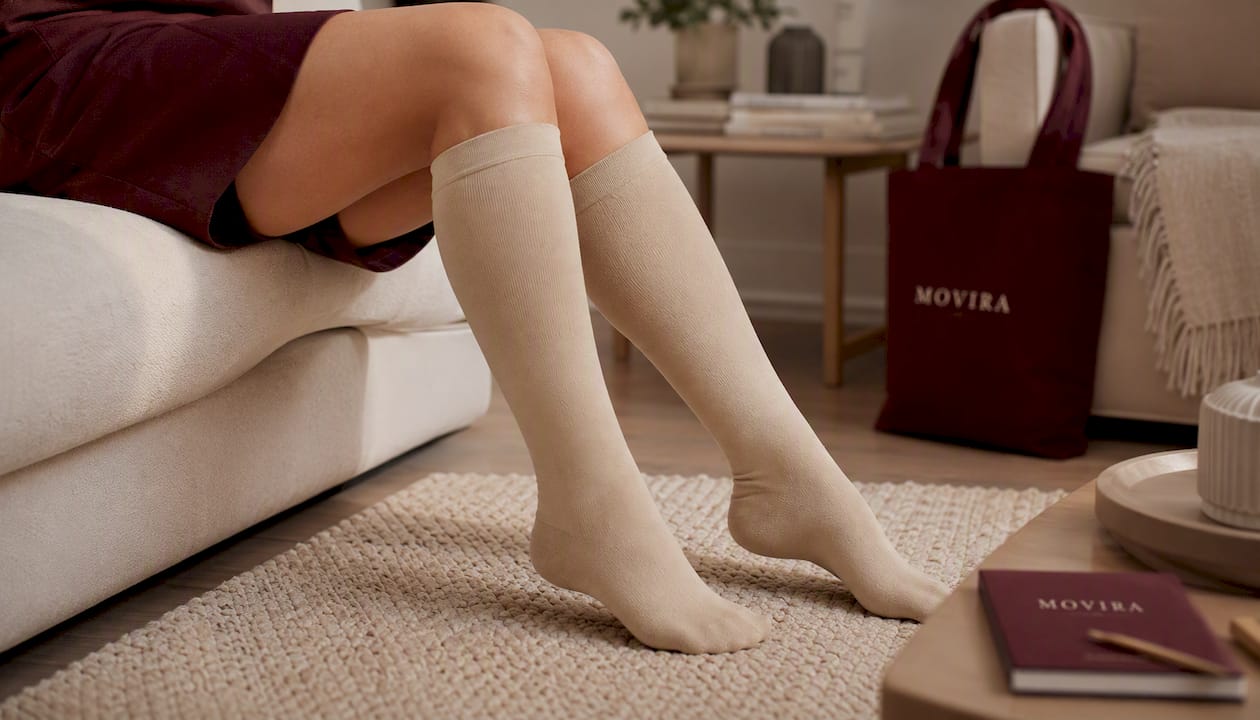
If you’ve been putting on socks in the morning only to peel them off by lunch because the band cuts in, the fit is the problem, not your willingness to wear them. Check your calf measurement against our sizing guide, browse the full wide-calf compression sock collection, and order with confidence. Every pair is backed by a 60-day fit guarantee, so if they’re not right, you have time to sort it out. If you’re wearing compression for a diagnosed medical condition, check with your clinician about the schedule and compression level that’s right for you before you start.
This article is general information, not a substitute for advice from a qualified doctor. Consult a qualified healthcare professional about your own circumstances before acting on anything here.
Sources
- Could you benefit from wearing compression socks? - Harvard Health
- What To Know About Compression Socks - Cleveland Clinic
- Patient instructions: compression stockings - MedlinePlus
- Shank Circumference Reduction by Sleep Compression Stockings in University Students and Convenience Store Cashiers - PMC
FAQ
Should You Elevate Your Legs While Wearing Compression Socks?
Yes, elevating your legs while wearing compression socks, especially during breaks or rest periods, can add extra comfort on top of what the socks already provide. It’s a helpful combination, not a requirement, and it’s most useful after a long day of standing or sitting.
Can You Overdo Compression Socks?
Wearing socks that are too tight for your calf size, or leaving them on despite pain, numbness, or skin color changes, is the real risk rather than simply wearing them too many hours. Comfort is the signal to remove or adjust them, and choosing the correct size from the start prevents most overuse problems entirely.
Can You Sleep in Compression Socks?
For most healthy people, no, since gravity’s effect on your veins is minimal while you’re lying down, so overnight wear doesn’t add meaningful benefit. Some clinicians prescribe overnight wear for specific conditions, so follow your provider’s instructions if you’ve been given a different schedule.
How Many Hours a Day Should You Wear Compression Socks?
Most people wear them for 8 to 16 hours, covering their waking hours from morning until bedtime. Start with a shorter window if you’re new to compression wear and build up gradually over a week or so.
When Should You Take Off Compression Socks?
Take them off at bedtime, or immediately if you notice numbness, tingling, increased pain, or changes in skin color. Give your skin a nightly break with a simple cleanse and moisturize routine before your next wear.
Recommended
- 5 Reasons Why Women Are Switching to these Compression Socks
- Personal Story / Comparison
- Tried Every Compression Sock
This article is for general information and fit/comfort guidance only. It is not medical advice. Movira socks are everyday comfort products, not a medical or prescription device.
Tags:
Previous
Get Compression Socks On in Under a Minute for Wide Calves
Next
3–6 Months: Compression Socks Lifespan for Wide Calf Women
Related articles
Compression Leggings vs Socks: What to Wear
Nov 20 2026
Zipper Compression Socks Problems: What to Know
Nov 20 2026

Compression Levels Explained for Everyday Wear
Nov 20 2026

Graduated Compression for Wide Calves: Daily Use
Nov 17 2026

Tight Socks? How to Find a Comfortable Fit
Nov 17 2026
Light Compression Socks for Women: When to Wear
Nov 15 2026

Knee High Socks for Wide Calves: How to Choose
Nov 14 2026
Wide Calf Compression Guide: Find Your Fit
Nov 13 2026