

Women With Wide Calves: Move Hourly for a More Comfortable Flight
Feet often swell on flights because sitting still for hours lets fluid settle in your lower legs, something Mayo Clinic describes as common during air travel. The simplest habit that helps: get up and move your ankles and calves every hour. Most mild swelling fades on its own within a day. The exception is swelling in only one leg with pain, warmth or redness, which needs prompt medical attention.
TL;DR:
- Moving every 60 to 90 minutes, doing ankle exercises in your seat, and sipping water are the simplest habits for a more comfortable flight.
- If you wear compression socks for travel comfort, fit matters most. A sock that digs in or rolls down is just uncomfortable.
- Wide-calf compression socks made for calves up to 25 inches help women with wider calves get a comfortable fit.
- Measure your calf sitting down, ideally in the morning, and if you're between sizes, choose the larger one.
- Mild swelling usually fades within a day after landing, but swelling in one leg, with pain, or that doesn't go away needs a doctor.
Table of Contents
- What Causes Feet and Ankle Swelling During Flights?
- Where Compression Socks Fit In
- How to Stay Comfortable on a Flight
- Why Fit Matters More Than You’d Think for Wider Calves
- Simple Seat Exercises for Long Flights
- How Long Does Flight Swelling Last, and When Should You Worry?
- Why Fit-First Travel Socks Matter for Women With Wider Calves
- Find Your Right Size Before Your Next Flight
- Sources
- FAQ
What Causes Feet and Ankle Swelling During Flights?
When you walk, your calf muscles help move blood back up from your lower legs. Sit still in a cramped airplane seat for three hours, and they barely work. Fluid tends to settle into your feet and ankles simply because of gravity, which Mayo Clinic describes as common and usually harmless during air travel.
A tight economy seat also gives your legs almost no room to change position, and dry cabin air and salty snacks don't help.
Some travelers notice it more than others, for example on flights longer than four hours, after recent surgery, with hormone therapy or hormonal birth control, or with a personal or family history of circulation problems or blood clots. If any of these apply to you, talk with your doctor before a long flight.
Where Compression Socks Fit In
Many travelers like wearing graduated compression socks on long flights for the gentle, supported feel through the calf. They are a comfort choice, not a treatment, and they work best alongside moving around.
- For everyday travel comfort, 15 to 20 mmHg is a popular level.
- Fit matters as much as the compression level, especially for wider calves.
- If you have a history of blood clots, recent surgery, or a circulation condition, ask your doctor before choosing compression for travel.
How to Stay Comfortable on a Flight
It mostly comes down to keeping your legs moving. In order of priority:
- Move every 60 to 90 minutes. Stand, walk the aisle when the seatbelt sign is off, or shift your weight from foot to foot if you can't fully stand.
- Do ankle pumps in your seat. Flex your foot up and down 15 to 20 times, then repeat every 30 to 60 minutes.
- Add seated calf raises. Lift your heels off the floor, hold for a second, lower, and repeat 10 to 15 times per set.
- Sip water. Drink steadily through the flight, and go easy on alcohol and salty snacks.
- Choose an aisle seat when you can. It makes standing and stretching far easier without disturbing a row of strangers.
- Loosen anything tight. Swap snug waistbands, belts or shoes for something comfortable before takeoff.
- If you wear compression socks, choose the right size. Measure your calf first; a sock that's too tight at the top digs in, and one that's too loose slides down.
Pro Tip: Set a phone reminder for every hour of your flight. It sounds simple, but it's the difference between doing your ankle pumps and forgetting until your feet already feel tight.
Why Fit Matters More Than You’d Think for Wider Calves
If the band at the top is too tight for your calf, it can dig in and feel uncomfortable within the first hour. Too loose, and it rolls down around your ankle by the time you land, which is the most common complaint from women with wider calves who've tried standard sock sizing.
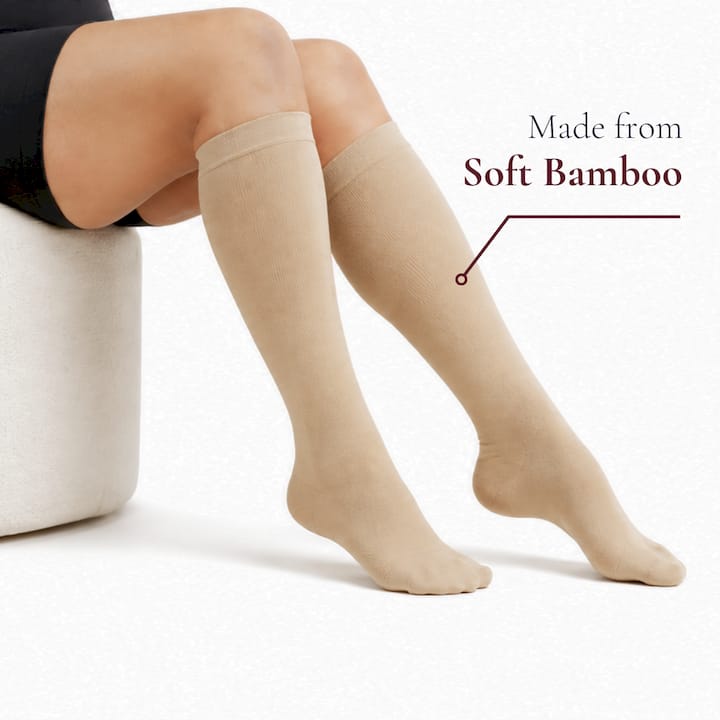
The fix starts with an honest measurement. Sit down with your foot flat on the floor, wrap a soft tape measure around the widest part of your calf, and match that number to the size chart rather than guessing from your shoe or shirt size. If you're between sizes, choose the larger one.
Look for these features in a travel sock:
- A soft fabric that feels gentle on the skin during a long flight
- A stretchy knit that moves with your leg
- A wide-calf design made for calves up to 25 inches
- A top band that sits flat without a hard edge
Movira's wide-calf compression socks are designed around exactly that. They fit calves up to 25 inches in sizes L through 4XL, are knit with soft bamboo viscose, and are designed to stay up comfortably. Every pair comes with a 60-day fit guarantee.
Pro Tip: Measure your calf in the morning, sitting down. It's the easiest way to get a consistent number.
Simple Seat Exercises for Long Flights
You don't need floor space to keep your calves moving. These work in a standard economy seat:
- Ankle pumps: Point your toes forward, then flex them back toward your shins. Do 20 reps every 30 to 60 minutes.
- Heel and toe raises: Alternate lifting your heels, then your toes, off the floor for 10 reps each.
- Ankle circles: Rotate each foot in a full circle, 10 times in each direction.
- Seated marching: Lift your knees one at a time as if walking in place, for 20 to 30 seconds.
Time your aisle walks around beverage service rather than fighting the cart, and always check the seatbelt sign first. Try not to sit with your legs crossed for long, and keep your carry-on bag in the overhead bin rather than under the seat in front of you. That extra legroom is what lets you stretch out and actually do these exercises.
How Long Does Flight Swelling Last, and When Should You Worry?
Once you land, put your feet up for at least 20 minutes, take a short walk, drink water, and slip off tight shoes as soon as you reasonably can. A gentle calf massage from ankle toward knee can also feel good.
Mild swelling from a flight usually starts easing within a few hours and is often gone within a day. If it lingers past 24 to 48 hours, get it checked.
Watch for these red flags, which call for same-day or emergency care:
- Swelling in only one leg, especially with pain, warmth, or redness
- New bruising alongside persistent swelling that isn't improving
- Chest pain or shortness of breath, which needs emergency care immediately
Why Fit-First Travel Socks Matter for Women With Wider Calves
Too many women give up on compression socks after one bad experience with a pair that rolled down mid-flight or left a red ring around their calf. That's a fit problem, not a reason to give up on them.
We made Movira to solve exactly that: a stretchy bamboo viscose knit, sizing for calves up to 25 inches in L through 4XL, a top band designed to sit flat, and a 60-day fit guarantee behind it. Measure your calf, check the wide-calf collection, and try a pair knowing you're covered if the size isn't right.
— Movira Team
Find Your Right Size Before Your Next Flight
Movira exists for one reason: women with wider calves deserve a travel sock that feels comfortable from takeoff to landing. Every pair is knit from soft, stretchy bamboo viscose, sized for calves up to 25 inches in L through 4XL, and backed by a 60-day fit guarantee.
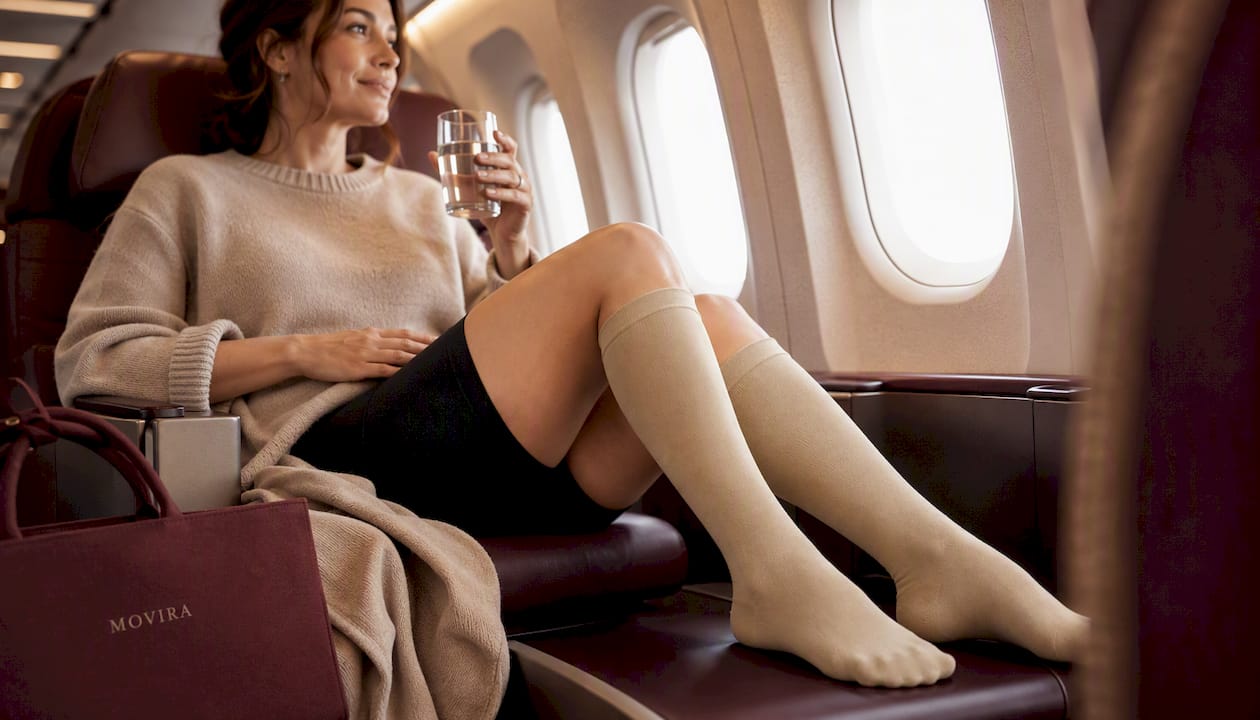
Start by measuring your calf, sitting down and ideally in the morning, then browse the wide-calf compression socks collection to find your size, or go straight to the bamboo viscose compression sock page to see the full details. If you have a history of blood clots, recent surgery, or another circulation condition, talk with your doctor before your next trip.
Sources
FAQ
How long do feet stay swollen after flying?
Mild swelling from a flight usually starts easing within a few hours and is often gone within a day. If it's still there after 24 to 48 hours, or it's worse in one leg than the other, it's time to see a doctor.
What should I drink on a long flight?
Plain water is your best bet, sipped steadily through the flight. Go easy on alcohol and salty drinks or snacks.
Are compression socks worth wearing on a flight?
Many travelers like them for the gentle, supported feel on a long flight. The key is a pair that actually fits your calf, so it doesn't dig in or roll down. If you have a health condition, a history of blood clots or recent surgery, ask your doctor what is right for you.
How can I get my ankles feeling better after flying?
Put your feet up for 20 minutes or more, take a short walk, and drink water once you land. A gentle calf massage and taking off tight shoes can also help you feel more comfortable.
Recommended
- Compression Socks for Flying: Benefits
- Get Compression Socks On in Under a Minute for Wide Calves
- Wide-Calf Bamboo Viscose Compression Socks (L–4XL)
- Movira Bamboo Viscose Wide-Calf Compression Socks | L–4XL
This article is for general information and fit/comfort guidance only. It is not medical advice. Movira socks are everyday comfort products, not a medical or prescription device.
Tags:
Previous
3–6 Months: Compression Socks Lifespan for Wide Calf Women
Next
Stylish, Supported Compression Socks for Wide Calves Up to 25 Inches
Related articles
Compression Leggings vs Socks: What to Wear
Nov 20 2026

Zipper Compression Socks Problems: What to Know
Nov 20 2026

Compression Levels Explained for Everyday Wear
Nov 20 2026

Graduated Compression for Wide Calves: Daily Use
Nov 17 2026

Tight Socks? How to Find a Comfortable Fit
Nov 17 2026
Light Compression Socks for Women: When to Wear
Nov 15 2026

Knee High Socks for Wide Calves: How to Choose
Nov 14 2026

Wide Calf Compression Guide: Find Your Fit
Nov 13 2026